Ghost ants (Tapinoma melanocephalum), commonly categorized alongside other sweet-feeding species as sugar ants, represent one of the most stubborn indoor perimeter threats throughout Miami-Dade County. Measuring…
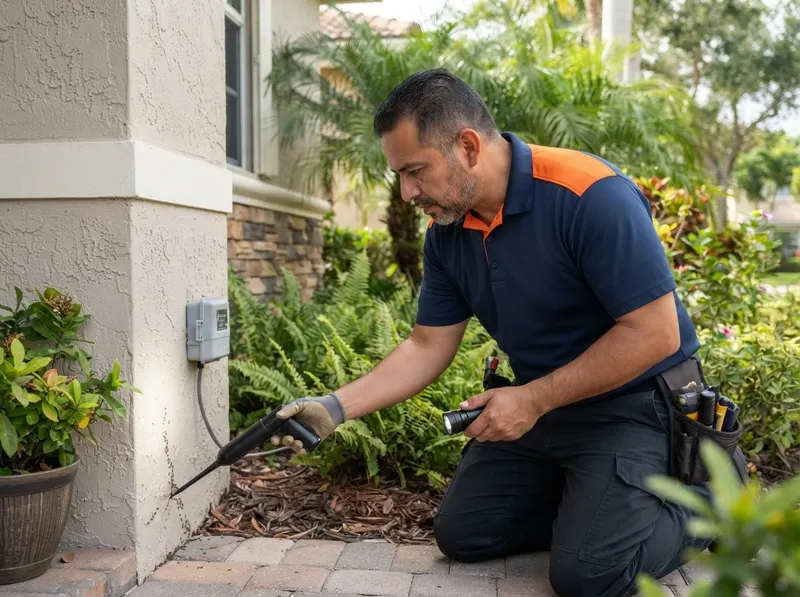
Ghost ants (Tapinoma melanocephalum), commonly categorized alongside other sweet-feeding species as sugar ants, represent one of the most stubborn indoor perimeter threats throughout Miami-Dade County. Measuring roughly 1.3 to 1.5 millimeters in length with translucent gasters and dark heads, these insects thrive in subtropical microclimates where indoor humidity consistently exceeds 60 percent. In residential communities such as Royal Oaks, Loch Lomond, and Windmill Gate, ghost ants establish multi-queen colonies that nest inside baseboard voids, electrical junction boxes, and beneath sink vanities. Attempting to manage an infestation with over-the-counter pyrethroid sprays reliably worsens the structural infestation. Synthetic pyrethroids cause defensive budding, a biological mechanism documented by the University of Florida IFAS Extension where exposed colonies fracture into multiple self-sustaining satellite nests led by separate queens.
SafeHarbor Pest Removal implements a systematic eradication protocol centered on systemic carbohydrate baits and micro-deposit transfers. According to technical resources from the Pest Control Technology Association, sweet-feeding ants rely on shared trophallaxis to sustain brooding queens deep within wall framing. Applying slow-acting active ingredients allows foraging worker ants to carry non-repellent toxicants directly into harborage zones without detecting the lethal dose. Technicians survey critical entry points around structural plumbing penetrations, window frames facing damp garden beds near Loch Ness Community and Silver Crest, and expansion joints common to South Florida slab-on-grade construction. Guidelines from the National Pest Management Association confirm that eliminating exterior vegetative bridges, such as ficus hedges, palm fronds, and flowering shrubs contacting roof soffits, is mandatory to isolate interior nesting sites from exterior moisture zones.
Treatment execution follows strict chemical stewardship outlined by the Environmental Protection Agency and structural pest codes enforced by the Florida Department of Agriculture and Consumer Services. Inside kitchen prep spaces and bathrooms, targeted gel matrices are injected into secluded wall voids and cabinetry hinge pockets, away from food surfaces and domestic traffic. Exterior containment involves non-repellent liquid residual barriers applied around foundation footings, crawl spaces, and exterior pipe chases near Gramercy Park, Royal Palm Estates, and the Lake Clarke Shores enclave. Structural property managers must address secondary fungal issues often present in hidden damp zones, as recommended by the Institute of Inspection Cleaning and Restoration Certification, since damp decaying framing offers primary harborage for developing satellite colonies.
Effective ant remediation requires structural cooperation alongside professional chemistry. Structural perimeters must maintain clearance from irrigation heads, as excessive municipal or well water reduces the residual life of perimeter barriers evaluated under ASTM International environmental testing standards. SafeHarbor Pest Removal also references sanitation standards defined by the U.S. Department of Health and Human Services Food Safety Portal and household allergen exposure data from the National Institute of Environmental Health Sciences to protect domestic living areas. Complete nest collapse typically registers within 7 to 14 days following bait deployment, during which ant activity may temporarily shift as workers aggressively recruit colony members to the placement sites. Properties experiencing active trails near Miami Lakes Loch Isle or around Main Street can reach SafeHarbor Pest Removal at (786) 947-6424 to schedule an on-site structural assessment.
Every job gets a firm, written price after a free on-site visit.
For standards, safe disposal, and service guidance on pest control services in Miami Lakes, FL, useful references include U.S. EPA, ENERGY STAR, U.S. Dept. of Energy, Consumer.gov, U.S. Census Bureau, and Google Maps. General consumer and small-business resources are available from USA.gov, Better Business Bureau, FTC Consumer Advice, U.S. Small Business Administration, and Ready.gov.
Tell us about your ghost ant & sugar ant control job in Miami Lakes and we'll send a clear, written quote, usually the same day.
 SafeHarbor Pest Removal